
Episode 44: Honouring Early Pregnancy Loss through; Culture, Care and the Physiological perspective with Dr Naomi Jansson
In this deeply thoughtful and expansive conversation, I’m joined by Naomi Jansson to explore early pregnancy loss through a cultural, historical, and physiological lens.
Together, we unpack the lived experience of women navigating pregnancy loss and examine the broader context in which it exists — including the taboo that still surrounds miscarriage, the influence of culture and religion, and the gaps in current health infrastructure.
We explore how traditional medicine systems acknowledge the physiology of pregnancy loss, and how different cultures manage and support women during this time. By looking beyond the Western model of care, we reflect on what is often missing — and what becomes possible when pregnancy loss is recognised as a significant rite of passage and honoured as a true postpartum experience.
This episode places strong emphasis on nourishing and supporting the mother not only emotionally and psychologically, but biologically and hormonally. We discuss the importance of tending to the postpartum body after early loss, and how deeper recognition at an individual and systemic level can lead to more compassionate, comprehensive care.
Naomi also shares practical examples of how care can look different, and introduces the “Complete Care Women’s Wellness ” model she is developing – a clinical and case-management approach designed specifically to better support women experiencing pregnancy loss.
This is an important and necessary conversation for midwives, birth workers, and anyone wanting to better understand how we can meet women – and ourselves – with greater reverence, understanding, and care.
Dr Naomi Jansson
Is a second-generation Chinese Medicine Doctor and educator, and an integrative Clinical Nurse Consultant specialising in Women’s Health and Complex Clinical Care, with over 25 years of experience. She works across private clinics, integrative health centres, and hospital settings, where she has held leadership roles including Clinical Lead and Perinatal Service Manager. In all settings, she is a dedicated advocate for Traditional Medicine, women-centred models of care, and culturally responsive practice.
Naomi serves as an advisor on the STEM Committee at RMIT and sits on the Board of the Matrescence Birth Centre. She is the Founder and Clinical Director of The Well Supported Mothers Collective, which provides professional education and resources in women’s health, pregnancy, and postpartum care.
Raised in a Traditional Medicine household, Naomi developed an early, embodied relationship with classical healing systems. This foundation led to formal study and lifelong apprenticeship across multiple East Asian medical traditions, including Chinese Medicine (Zhongyi), Japanese Medicine (HariKyu), Tibetan Medicine (Sowa Rigpa), and Indian Medicine (Ayurveda).
In addition to her classical training, Naomi has cultivated deep relationships with intercultural and folk medicine traditions for women’s health. Her studies include learning from Indigenous Australian, South American, European, Middle Eastern, Irish/Celtic, and Russian teachers, midwives, and traditional practitioners. Her training encompasses pelvic steaming, Closing the Bones rituals, rebozo and faja abdominal binding, traditional womb and breast care practices, movement for birth, folk herbalism, and therapeutic foods and teas for recovery.
Her work holds a particular focus on comprehensive postpartum recovery, honouring all pregnancy and birth experiences.
Resources Mentioned
Follow me on ;
Instagram: @whatifweweretaught and @the_pregnancy_collective
Facebook: The Pregnancy Collective
Follow Naomi
Instagram — @gentle_traditions and @well_supported_ mother
and @complete_care_womens_wellness
Website —Gentle Traditions and The Well Supported Mothers Collective and Complete Care Womens Wellness
Please note: All information shared in this podcast is for informational purposes only and is not intended to be a substitute for medical advice.
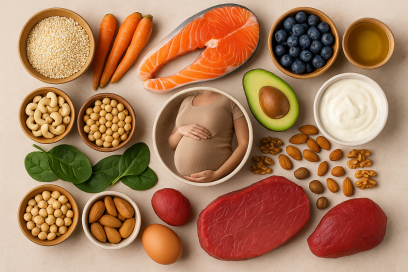
10 Simple Nutrition Tips for a Healthier Pregnancy
Eating well during pregnancy doesn’t have to be complicated. With just a few simple shifts,…
Episode 37- Understanding Early Pregnancy Loss — A Holistic Conversation with Paige Waters
In this episode, we take a deep dive into the much-needed conversation around early pregnancy loss,…
Episode 18-A Dad’s perspective on Birth and the Postpartum
Welcome and happy new year 2024!! We kick off 2024 with a Dad's perspective of…